The Real Number · 8 min read
What Harvey Has Actually Cost
Seven months with an off-track Thoroughbred, line by line. The purchase price turned out to be the least important number on the page, and the most expensive thing about him was not a vet bill.
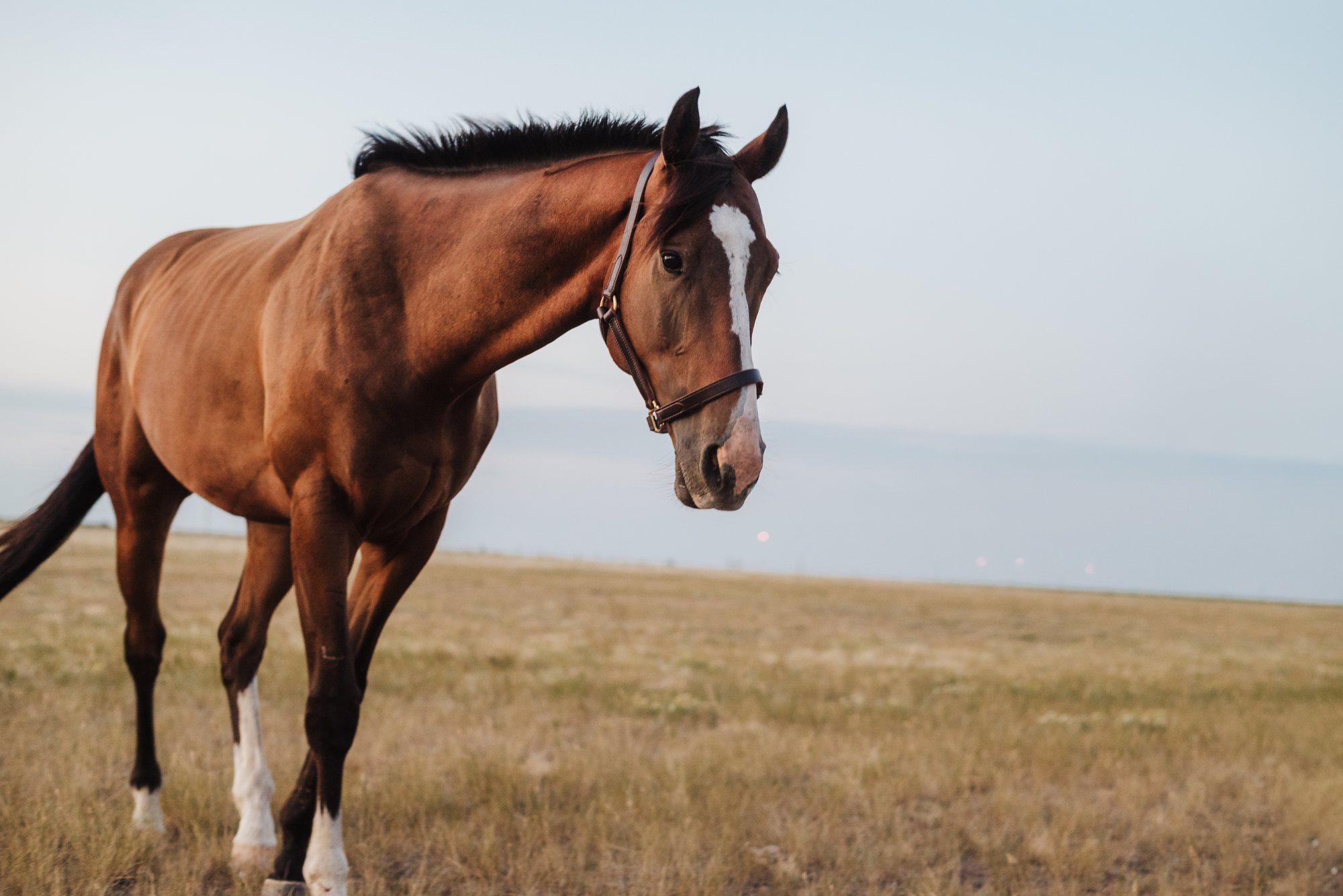
I need to start with the part most people leave out, because leaving it out would make everything after it dishonest.
I did not pay for Harvey. My mother bought him at the end of January for seventy-five hundred dollars and gave him to me. She also paid for everything that happened to him in Virginia, which as you will see was most of it. So this is not a post about what I spent. It is a post about what he cost, which is a different thing, and I am in the strange position of being able to tell you the number without having felt all of it.
I still think the number matters. Maybe more this way, actually, because I got to watch it accumulate without the flinch.
The honest ledger
Seven months, from the end of January to the end of August. Two states. One horse.
| Purchase price | $7,500 |
| Board in Virginia, about 5.4 months | ~$4,600 |
| Restart, roughly 42 rides at $50 | ~$2,100 |
| Ulcers: three scopes, medication, supplements | ~$6,100 |
| Pre-purchase exam, kissing spine x-rays, Lyme panel, Coggins | ~$1,060 |
| Shipping, Virginia to Colorado | $3,300 |
| Farrier, Colorado board, vaccines, routine vet | ~$1,700 |
| Seven months | about $26,400 |
A note on precision. The board, the rides, the purchase and the haul are exact. The medication and veterinary lines are reconstructed from his actual discharge instructions, which tell me exactly what he was on and for how long, priced at what those things generally cost. So the shape is right and the arithmetic is honest, but do not take my ulcer subtotal to the bank. If the receipts turn out to disagree with me, I will come back and say so here.
The purchase price is twenty-eight percent of that total. In seven months. And it is the only number anyone ever asks about.
The ulcers were not the expensive part
They felt like the expensive part. They were certainly the frightening part. He came to me sensitive over the back and increasingly unwilling, and we had chased it properly before he was even ours: Lyme came back negative, we x-rayed for kissing spine and the films were clean. It was February before anyone scoped him, and that is when we found Grade 3 squamous ulcers.
Three gastroscopies between February and June. Something like sixty tubes of omeprazole. Sucralfate twice a day for months, misoprostol on top of that, one gut supplement traded for another when the first one plainly was not working. It came to about six thousand dollars and it consumed my entire spring.
It is still less than a quarter of what he cost.
The most expensive thing about Harvey was a zip code
Board in Virginia ran eight to nine hundred a month. Board here in northeastern Colorado is two hundred and fifty. Add the grain he gets on top of that and call it two seventy-five.
Five and a half months of Virginia board came to more than his entire ulcer medication bill. Not the scopes, not the vet visits, just the board. And when I add up what he was costing per month in Virginia against what he costs per month here, it is roughly twenty-four hundred against nine hundred and change.
Nobody warns you about this. Every article about the cost of horses talks about vet emergencies, and the emergencies are real, but the thing that quietly ate the budget was the ordinary monthly bill in an expensive part of the country. I did not have a surprise. I had geography.
The seven hundred dollars I want you to learn from
The haul was quoted at twenty-six hundred dollars. The final bill was thirty-three hundred.
There was a genuine miscommunication about what the trip involved, and to be fair the woman hauling was lovely about it, and both horses arrived happy and healthy, which is the only thing that actually mattered that week. She also gave me a real deal, because that price moved two horses and not one. Marshall effectively rode along for nothing.
But I had asked for a contract. I asked, and I was told, "I have never needed one."
And I let it go, because she was nice and I did not want to be difficult, and I was in the middle of moving my entire life across the country. So there was nothing in writing when the number changed, and no way to point at anything, and no conversation to be had. Seven hundred dollars is not a catastrophe. But it was seven hundred dollars I had not planned for, on a week when I was already stretched, and the whole thing was avoidable.
Get the contract. Get it even when they are nice. Get it especially when they are nice, because that is exactly when you will not want to ask.
I am not telling you that story because the hauler did something wrong. I am telling you because I did. I knew the right thing to do, I asked for it once, and then I dropped it to avoid an awkward moment. That is a very ordinary failure and I suspect it is a common one.
What I would tell someone standing where I stood
The purchase price is the cover charge. You already know that; everyone says it. What nobody breaks down is the ratio, so here is mine: for every dollar of purchase price, he cost about two and a half more in seven months.
Ask where the horse will live before you ask what the horse costs. The monthly number in your area, multiplied by every month you will own him, is almost certainly the largest figure in your entire ownership.
Budget for the diagnostic road, not just the diagnosis. The Lyme panel and the clean spinal x-rays were about a thousand dollars, spent before he was even ours, and they bought us no answer at all. They were not wasted. Ruling things out is how you get to the truth. But they are real money spent on negatives, and nobody includes them in the sample budgets.
And write down what you were quoted, the day you are quoted it.
Why I keep the number at all
Honestly? Partly because I am trying to be a more organized person than I actually am. I am not naturally the woman with the spreadsheet. I am the woman who decided to become her, somewhere around the third gastroscopy, because the alternative was not knowing.
And because he arrived with immaculate papers that stopped exactly where they got interesting, and I decided that whatever else happens to this horse, nobody is ever going to have to guess about the part of his life that I was there for.
That includes the money. The money is the least romantic part of loving an animal and it is the part that tells you whether you can keep doing this well.
Morgan
Keep reading