The horse nobody wrote down
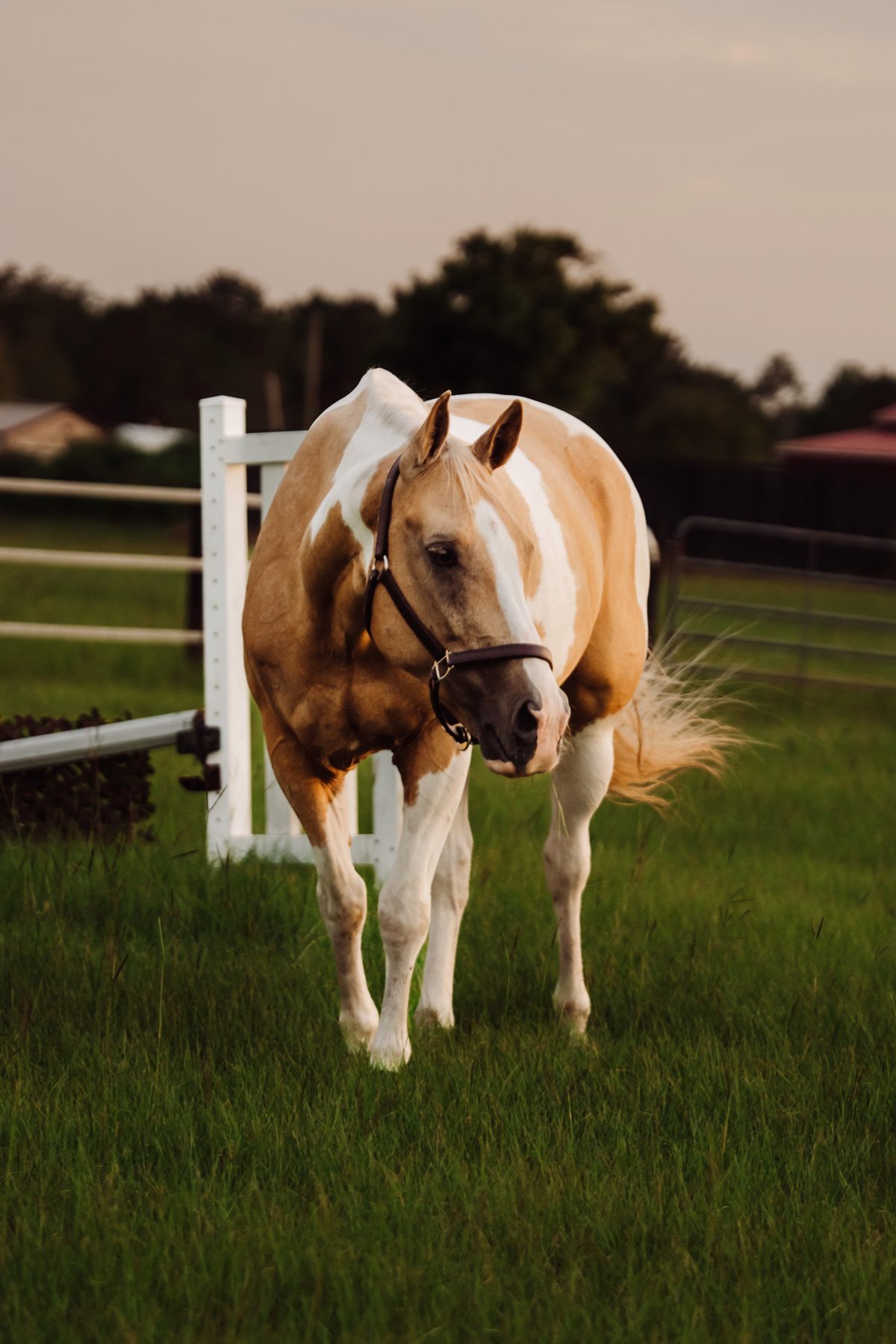
Marshall, at 21.
Bought out of a classified ad in 2005 with money I'd saved since sixth grade. Twenty-one years later his official file still lists him as the wrong color.
The horse nobody wrote down
Bought out of a classified ad in 2005 with money I'd saved since sixth grade. Twenty-one years later his official file still lists him as the wrong color.
He turned twenty-one on the twenty-ninth of July. No veterinary record anywhere says so. They all have him down as January first, because that is the birthday the industry assigns when nobody knows or nobody asks. It's a convention, not a mistake. But it means the date I have celebrated for twenty-one years exists in exactly one place, which is me.
I found him in the Thrifty Nickel. I was in sixth grade, newly moved from Virginia to Colorado, and I had money for one reason: my mother had spent years refusing to let me spend any.
That was her rule, and she was strict about it. Not a vague instruction to save for a rainy day. She told me that one day I would want something big, and that when that day came I would need to be able to pay for it myself. So I did not buy things. For years I did not buy things. I have thought about that rule often since, because she was right, and because there is no possible way she knew she was describing a palomino colt in the back of a newspaper.
Twelve hundred dollars, maybe fifteen hundred, and that was for two horses, because the woman selling them liked me and decided she wanted me to have them.
He was called King Solomon then. He was two months old.
Her name was Baby. She was a cremello mustang, captured off the range in Nevada in the nineties, out of the Eureka herd, and then moved around the country and used as a broodmare, the way a lot of those mares were. She came with a folder of papers, which is more than most horses get and less than it sounds like.
She had a filly before Marshall. They called her Bella, because she was beautiful. She broke her leg in the pasture at a few months old and had to be put down.
So the man who owned the stud, a paint stallion named Leon, bred Baby again.
That is the entire reason my horse exists. Marshall is the second attempt. He is here because a filly died and somebody decided to try the same mare again, and in twenty-one years I have never once managed to hold both of those facts comfortably at the same time. I am not sure you are supposed to be able to.
So: a wild mare who was gathered, hauled around, bred, lost a foal, and was bred again. And out of all of that came a palomino paint colt in a newspaper ad, and a twelve-year-old with a coffee can of saved money.
Baby was mine until my senior year of high school.
She had a subluxating patella, which means the kneecap in her stifle would slide out of position and catch, so the hind leg locked and then let go. It meant she was never going to be a riding horse. I did not need her to be one. She had already done the only job anyone ever asked of her, more than once, for people who were not me.
So she just lived. She stood in my field and she raised her colt and she was, for the first time in her life, nobody's broodmare. That is the part I am proudest of and it is the part no folder of papers records. There is no line item for a mare being left alone.
Then she died, and I was seventeen, and Marshall is what is left of her.
He is the most documented thing in my life and almost none of it is written down.
I trained him myself, all of it, starting when I was barely old enough to know better. We did western first, rodeo queen and barrels and the whole business, around the time he turned five. From 2012 on we went english, and did hunters and jumpers for years. He has been a lesson pony in a couple of stretches. He has done therapy work.
He is 15.2 on a hill, which is my way of saying he is a glorified pony with the resume of a much larger horse.
He came with me to CSU in 2012. He came to Florida in 2021. He went to Virginia in 2025. This July he came back to Colorado, which is where I found him in the first place. He has crossed this country more times than most people I know.
The temperament is the whole thing. He reads grumpy. He has a face on him like Carl from Up, and it is entirely a bluff. He is a lover. He has always been a lover. That combination is why he could be a lesson horse and a therapy horse and a barrel horse and a hunter, sometimes in the same era, and never once make it my problem.
This year he became officially my daughter's horse. She is eight. He is twenty-one and in semi-retirement and I hop on him now and then, but he is hers, and watching that handoff happen has been strange and lovely in a way I did not prepare for.
Here is the part that made me start this whole project. His veterinary record, the one that travelled with him and went on a federal health certificate to cross state lines this summer, lists him as a Mustang, colored cremello.
He is a palomino paint. Cremello was his mother, and that practice never met his mother. Somebody just didn't know how to code a paint, and the error rode along for years, through moves, through vets, onto an interstate document signed by an accredited veterinarian.
Nobody was careless. This is simply what happens to a horse whose history lives in one person's head. Harvey's past is a matter of public record. Marshall has me, a coding error, and a placeholder birthday.
Earlier this month another horse in the pasture kicked him in the run-in shed and cut him badly. Stitches, stall rest, and a couple of days where I genuinely did not know how it would go. He's mending. It happens; horses are like that. But it is a very clear way to be reminded that the only complete copy of his medical history is a woman with a job and a bad memory.
If Marshall is the horse nobody wrote down, Harvey is the one whose record is immaculate and stops exactly where it started to matter. Between the two of them is everything I think about keeping a horse well.
Marshall Mondays
The senior-horse arc, told gently, in the letter every other Sunday and on the feed each Monday.