Marshall · 5 min read
Caring for a Senior Horse You've Loved Since Infancy
The part nobody posts about: keeping an old friend comfortable, and taking the long view of a life you've been lucky to witness in full.
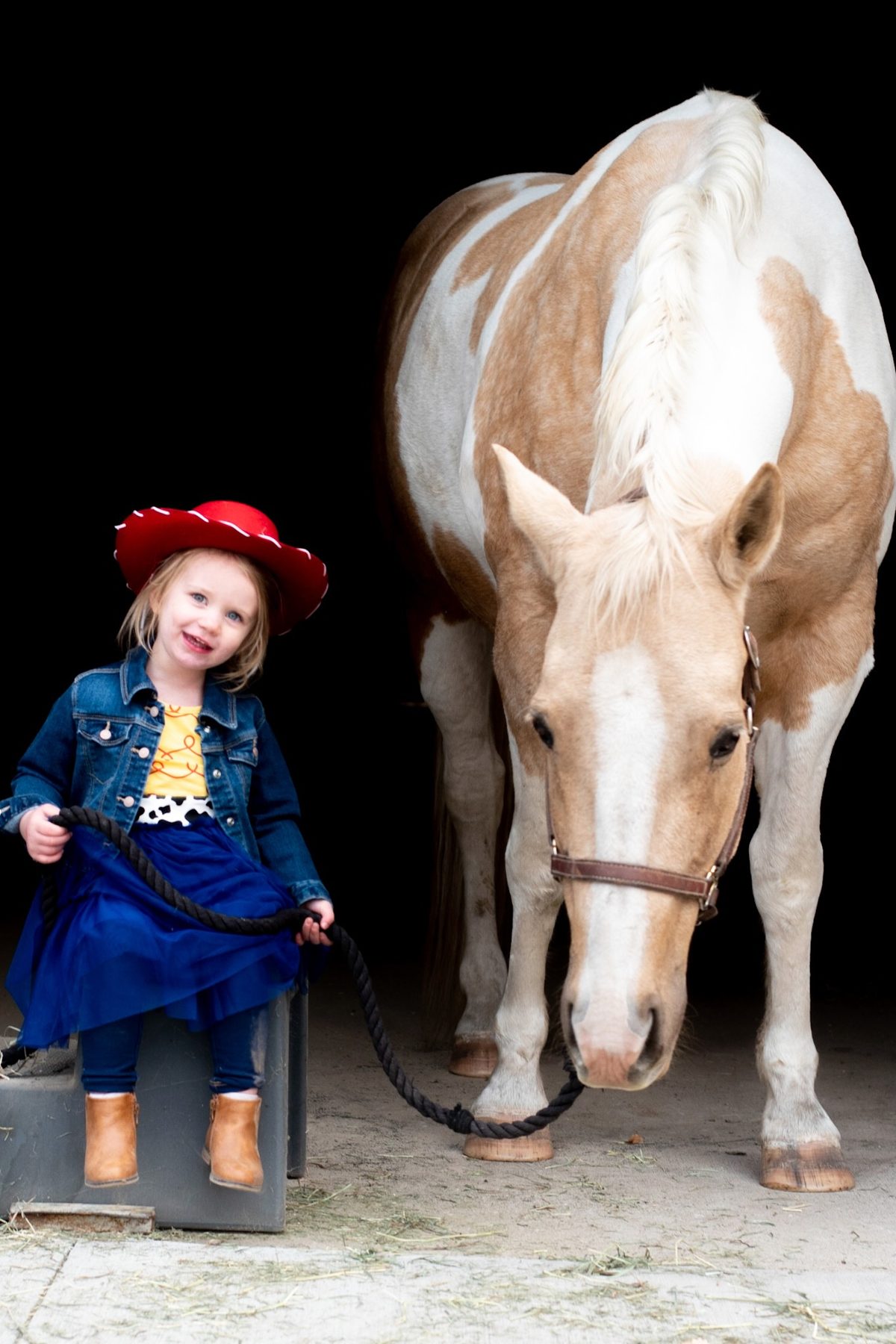
I got Marshall when he was two months old, which means there is no part of his life I didn't witness. I watched him learn to be led, learn to be ridden, learn to stand for the farrier. Now I'm watching him learn to be old, and it turns out that's its own kind of education, mostly mine.
Twenty-one is not a crisis. I want to say that clearly, because so much of what gets written about senior horses reads like a countdown. Marshall is sound, bright-eyed, and opinionated about his breakfast. But twenty-one is a different job than eleven was, and nobody handed me a manual for the transition. Here's what I've actually changed.
I stopped trusting "he seems fine"
A horse you've had since infancy is easy to read wrong, because you're reading him against a lifetime of him, not against what's normal for a 21-year-old gelding. I started taking a tape weight and a body-condition note every month, not because I doubted my eyes, but because slow change is invisible to eyes and obvious on paper. I have not caught anything alarming yet. That is not really the point. The point is that if I do, I will be able to say when it started.
The maintenance got specific
MSM and vitamin E, a ration balancer and alfalfa pellets, a closer look at his teeth twice a year instead of once, and a farrier conversation that's now about comfort as much as correctness. A trim every eight weeks, plus ten dollars for someone to hold him. None of it is dramatic. All of it is a line item I didn't used to think about, and now I write down, because the record of what I changed and when is the only way I'll know if it's working.
I started asking different questions at the vet
Not "is anything wrong" but "what does aging well look like for him, specifically, at this weight, in this climate, doing this much work." The answers have made me a better owner to him. They've also made me realize how much of senior care is just paying closer attention on a schedule, instead of waiting for something to announce itself.
A horse you've loved since he was two months old is a record you've been keeping without realizing it. Being his vet, his farrier, and his memory all at once is the job now, and I'm glad to have it.
The thing I did not plan for
This month another horse in the pasture kicked him in the run-in shed and cut him badly. Stitches, stall rest, and a couple of days where I genuinely did not know how it was going to go.
He is mending. Horses do this to each other and it was nobody's fault, and it is not a senior problem. But it clarified something anyway. At twenty-one, an ordinary injury is not an ordinary recovery. He needs longer than he used to, and the plan I would have made for him at eleven is not the plan he needs now.
It also made me notice how much of his history I was holding in my head while talking to a vet at speed.
He is my daughter's horse now
That happened this year. She is eight. He is the horse I started myself, more than twenty years ago, and he is now teaching a child to ride.
I have not finished processing that. It is the best possible outcome for a horse in semi-retirement and it is also the strangest feeling I have had in a while, standing in the middle of the arena watching the two of them.
The long view
Here's the thing about Harvey that I didn't expect: watching Marshall get old made me more careful with Harvey from day one, not less. I don't want another horse who starts his record at year fifteen. I want the whole book, this time, from the first page, because I know now, watching Marshall, exactly what it's worth to have it.
I don't know how many more birthdays Marshall gets. Nobody does, with any horse, at any age. What I do know is that I've written down enough of his life that whoever cares for him, including some future version of me who has forgotten details I am certain of today, will have the truth of him instead of a guess.
Morgan
Keep reading
The Blank Page Was Mine
The Records Every Horse Owner Should Keep (and Why)