Good Records, Good Care · 6 min read
The Blank Page Was Mine
Everyone assumes the off-track Thoroughbred is the one who arrived with no history. It was the other way round, and standing between the two of them is how I learned what a record is actually for.
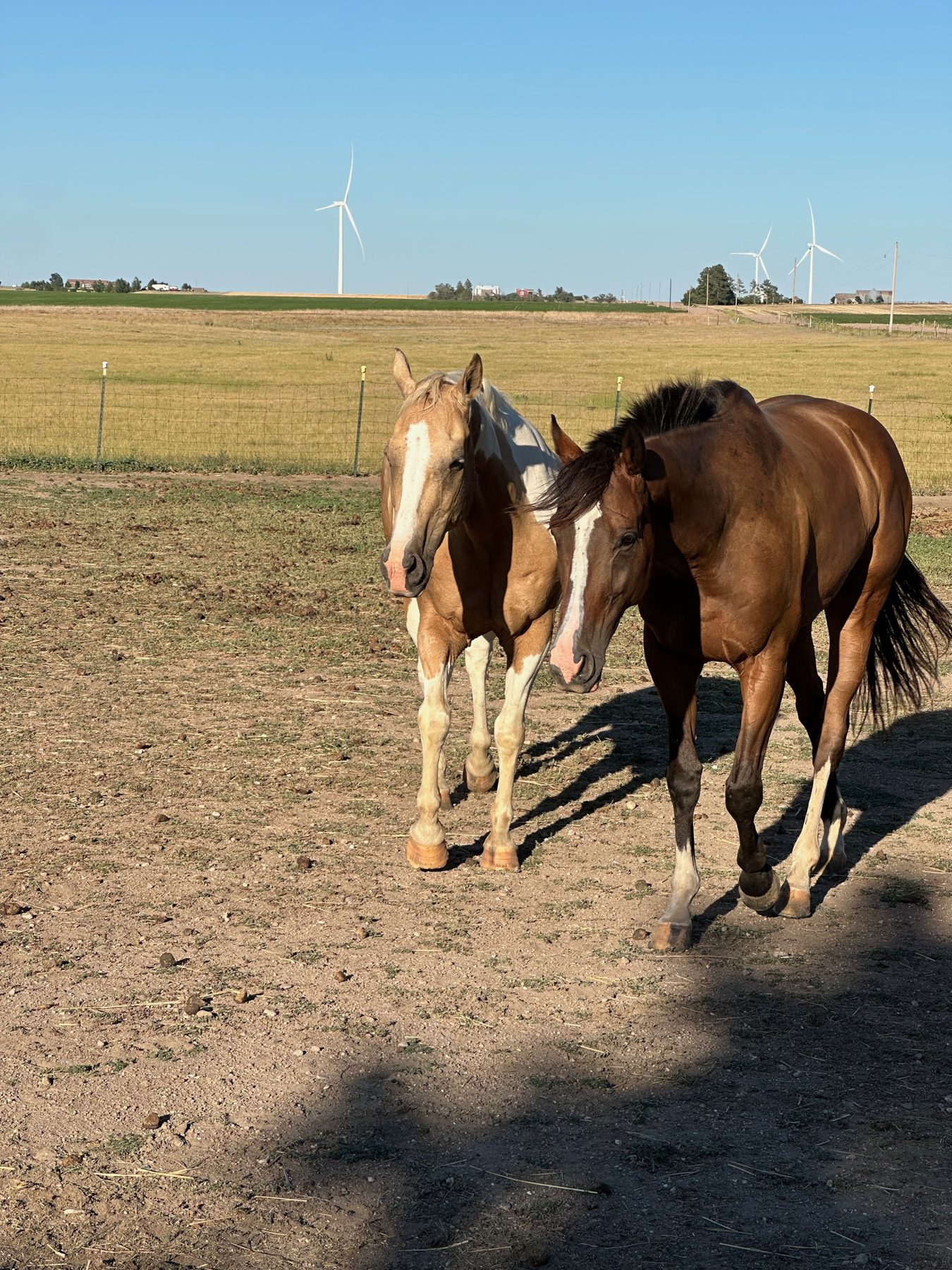
I thought I knew how this story went. You buy an off-track Thoroughbred, he arrives as a beautiful mystery with no past, and you spend a year assembling him out of rumour.
It went the other way round.
Harvey came with more documentation attached to him than any horse I have ever owned. Marshall, who I have had since I was in sixth grade, came with almost none.
And it is Marshall's history I would trust in a crisis, and Harvey's that let me down.
Paperwork is not a record
This is the distinction I did not have language for until I was standing in a pasture with both of them.
Paperwork is what an industry keeps for its own reasons. Racing kept Harvey's meticulously, because money depended on it. Identity, ownership, eligibility, breeding, all maintained to a standard most of us would envy. And when he stopped being commercially interesting, the keeping stopped with him. Not out of malice. It simply ended, the way a subscription ends.
Nobody was ever obliged to keep Marshall's history. So nobody did, including me, in any form that would survive me.
A record is the other thing entirely. It is what somebody keeps because they care what happens to the animal next.
Nobody makes you do it. There is no registry for it, no renewal notice, no fee. It is completely voluntary, which is precisely why it so rarely exists.
What a record is actually for
Catching things early. A weight you wrote down in March tells you something the day you look at your horse in June. A change is obvious once you have a date for when you first noticed it. Patterns only exist if somebody is keeping them.
The days you are not there. Your horse colics while you are three hours away at your desk, and the barn manager and the emergency vet work from whatever record exists. If it is in your head, it is not a record. It is a hope.
Handing the truth forward. Whoever cares for these two after me should inherit facts rather than guesses.
It does not have to be beautiful
I want to be honest about my own competence here, because the horse internet has a habit of presenting systems as though they arrived fully formed.
I am not naturally an organised person. I am a fairly disorganised one who decided to become the other kind somewhere around Harvey's third gastroscopy, because the alternative was carrying on not knowing things. His record began as a note on my phone and a spreadsheet I was quietly embarrassed by. It is still not impressive. It is just kept.
That is what the name of this place means. A kept horse is one whose story is held on purpose.
You do not have to do it my way, but I would ask you to do it some way. Write down the date you noticed the thing. Keep the vet's email. Photograph the feet on the first day. Not because it is tidy, and not because it makes you better than anyone else at this, but because one day you will need to know something and the only person who could have written it down was you.
Morgan
Keep reading