Learning in Public · 5 min read
You Can't Just Pull the Shoes Off a Thoroughbred
Barefoot is close to a moral position in some corners of the horse world. Here is why Harvey is in a full set, why Marshall is not, and why I stopped feeling bad about the difference.
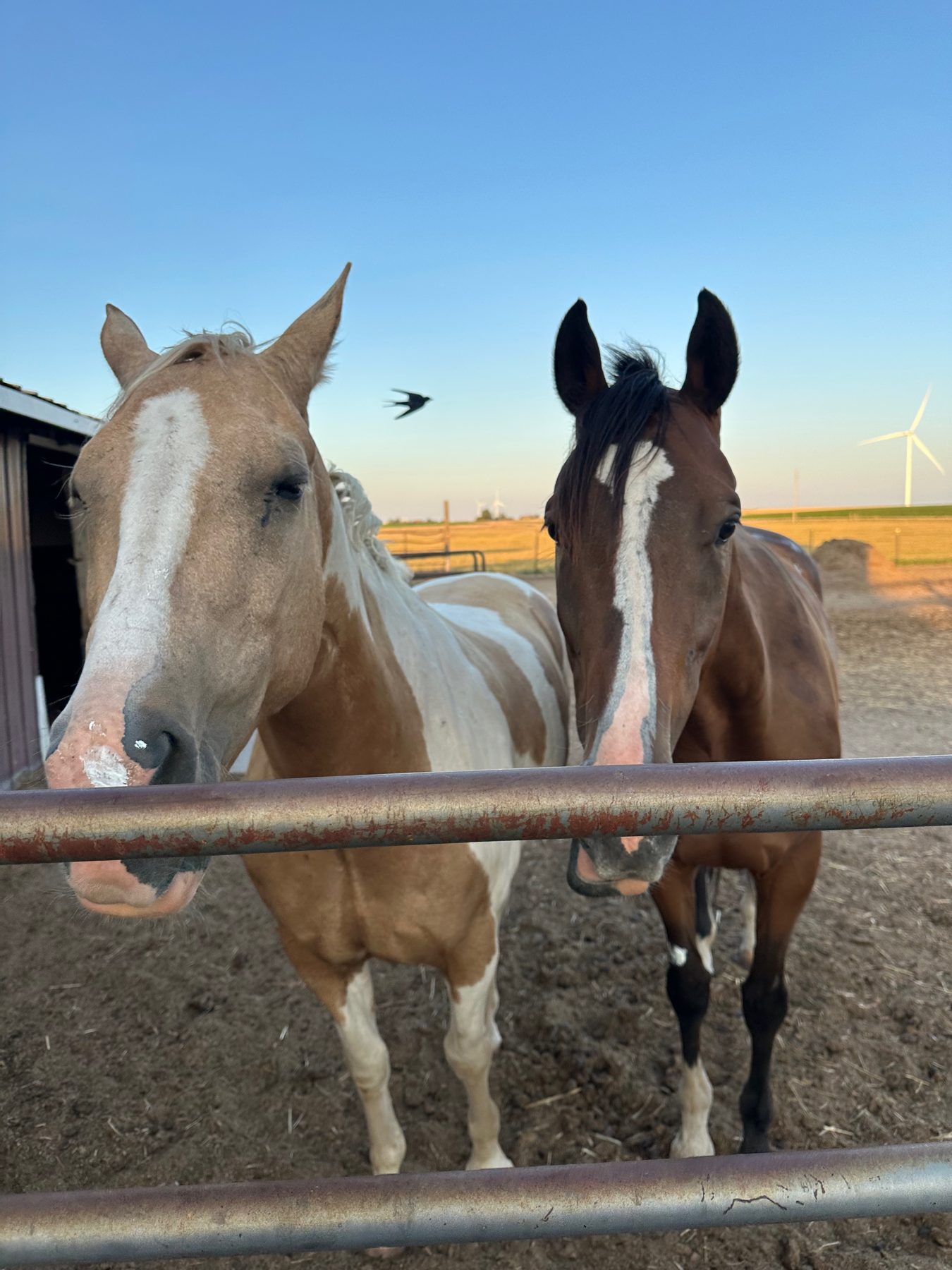
I own one horse in a full set of shoes and one horse who has been barefoot for most of his life, and I have opinions about neither of them, which I understand makes me a disappointment to the internet.
Marshall gets a trim every eight weeks. Sixty-five dollars, plus ten more because my farrier has to be paid to hold him, since I am usually at work. He is a mustang cross with mustang feet and he has essentially never needed anything else. If you want a case study in how good feet are mostly luck and breeding, he is it.
Harvey wears a full set. A hundred and sixty dollars, every five weeks.
Why I did not just take them off
When Harvey came off the track, more than one person suggested I pull his shoes and let him "go natural," in the tone of voice people use when they are describing something obviously correct that you have not thought of yet.
I had thought of it. It was appealing, honestly, because it would save me about seventeen hundred dollars a year and because the barefoot argument sounds good when you hear it quickly.
Here is the problem. A Thoroughbred coming out of race training has feet built for a specific job on a specific surface, and that job was not this one. Racing feet tend toward thin soles, long toes and underrun heels, and they have often been in shoes continuously since they were two. You do not undo that by removing the hardware. The hoof capsule has to actually change, and the horse has to stay comfortable while it does, and some horses simply never get there in a way that lets them work sound.
Pulling shoes off a horse whose sole is thin is not returning him to nature. It is asking him to walk on gravel with an opinion.
Barefoot is a good outcome. It is not a moral achievement, and it is not free just because it costs less.
What I actually know, and what I do not
Here is where I have to be careful, because this is exactly the kind of post where people invent a tidy narrative.
I do not have a year of farrier records for Harvey. I have had him seven months, and in the middle of those seven months I moved him across the country, which means he changed farriers. I do not have a clean before-and-after photo series, because I did not know to take one at the start. I did not photograph his feet on day one. I wish I had. That is genuinely one of the things I would do differently, and it is the reason I now photograph everything on the first day, for both horses.
What I can tell you is what is true right now. He is on a five-week cycle. He is in a full set. He is getting better.
The thing nobody mentioned about Colorado
One unexpected upside of the move. Virginia is humid, and wet ground is hard on feet in a way I had stopped noticing because it was simply the weather. Northeastern Colorado is dry, and dry is generally kinder to a hoof. Less softening, less thrush pressure, more consistency between cycles.
I did not move here for his feet. I moved here for a hundred human reasons. But it appears to be helping, and I want to note that honestly rather than claim credit for a good decision I did not actually make.
What I would tell someone with a new off-track horse
Photograph the feet the first day. All four, from the side and from the front and from underneath if your farrier will hold them for you. You will not know what you are looking at. That is fine. The photograph is not for you now, it is for you in eight months, when you genuinely cannot remember whether things are better.
Write down the cycle length and what your farrier said, every time, even when it is boring. Hoof problems are slow patterns. You can only see a pattern with dates.
And let the shoes be a veterinary and farrier decision rather than an identity. I am not anti-barefoot. Marshall is barefoot. I am against deciding in advance what a horse ought to need and then making him prove you right.
Morgan
Keep reading